
Unexpected repairs are part of owning Griffin GA rentals, but they do not have to create constant financial surprises. With a well-planned maintenance budget, landlords can better protect cash flow, preserve property condition, and make rental ownership more predictable.
The goal is not to know exactly when an HVAC system, appliance, or plumbing fixture will fail. Instead, owners should build a system that prepares for routine expenses, identifies larger needs early, and creates financial reserves for the unexpected.
A strong rental maintenance budget combines preventive maintenance, repair history, property inspections, realistic reserves, and regular review.
What Should a Griffin, GA Rental Maintenance Budget Include?
A maintenance budget should account for more than repair calls.
Effective property maintenance planning means accounting for the different types of expenses a rental property may require and separating them into clear categories to make budgeting easier.
Important categories include:
Routine maintenance: minor plumbing repairs, filter changes, pest prevention, safety checks, and small handyman work.
Seasonal maintenance: HVAC servicing, gutter cleaning, exterior reviews, landscaping, and weather-related preparation.
Turnover maintenance: cleaning, paint touch-ups, lock changes, flooring repairs, and appliance checks between residents.
Major replacements: HVAC systems, water heaters, roofing, appliances, flooring, and other components that eventually reach the end of their useful life.
Emergency repairs: unexpected problems requiring prompt attention to protect the property or address safety and habitability concerns.
Separating these categories makes it easier to distinguish normal operating expenses from larger future costs.
A month without maintenance requests should not automatically be viewed as extra profit. An aging HVAC system, roof, water heater, or appliance may still be creating a future expense even when everything appears to be working today.
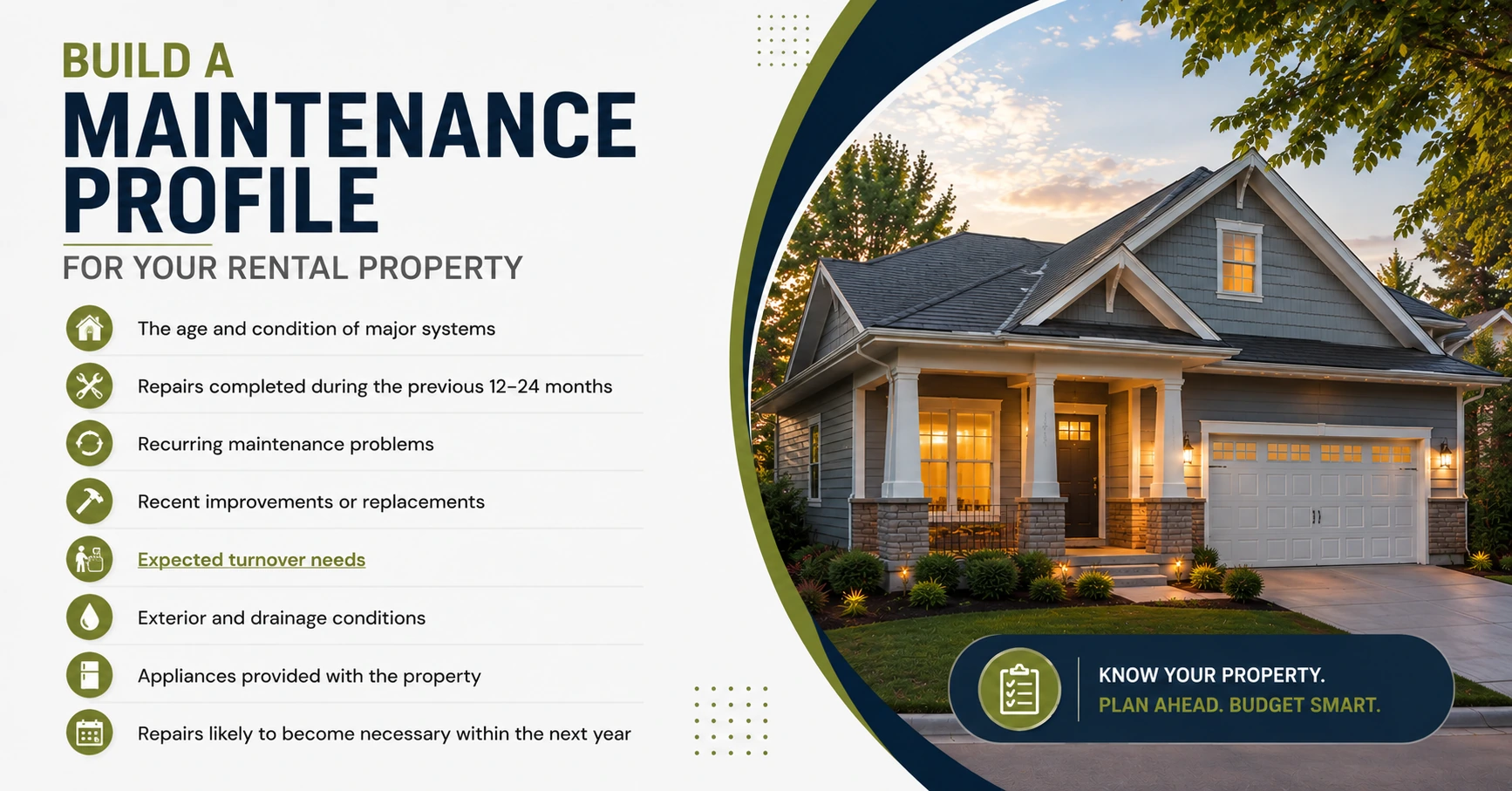
Build a Maintenance Profile for Your Rental Property
Not every Griffin rental should have the same maintenance budget.
A newer home with recently replaced systems may have different needs than an older rental with an aging roof, HVAC system, or plumbing fixtures.
Start by creating a simple maintenance profile for each property.
Review:
The age and condition of major systems
Repairs completed during the previous 12–24 months
Recurring maintenance problems
Recent improvements or replacements
Exterior and drainage conditions
Appliances provided with the property
Repairs likely to become necessary within the next year
This creates a clearer picture of where financial risk exists.
If you own multiple rentals, property-specific records are especially useful. One home may require more HVAC planning while another may have upcoming flooring, roofing, or appliance expenses.
Use Preventive Maintenance to Protect Cash Flow
Preventive maintenance helps landlords identify smaller issues before they have an opportunity to become more expensive.
A well-planned Griffin GA rental maintenance budget should account for preventive tasks such as monitoring HVAC performance, checking for plumbing leaks, reviewing gutters and drainage, inspecting exterior conditions, testing safety devices, and looking for signs of moisture or deferred maintenance.
Seasonal planning can provide additional structure.
Spring may include HVAC cooling service, exterior checks, gutters, and landscaping.
Summer can place additional attention on cooling performance, moisture concerns, and vegetation.
Fall provides an opportunity to review heating systems, gutters, roofing, and exterior conditions.
Winter can be used to evaluate plumbing protection, safety devices, and major maintenance priorities for the following year.
Revolution Rental Management emphasizes property maintenance and inspections as part of protecting the condition of managed rentals, including addressing maintenance issues through an organized process.
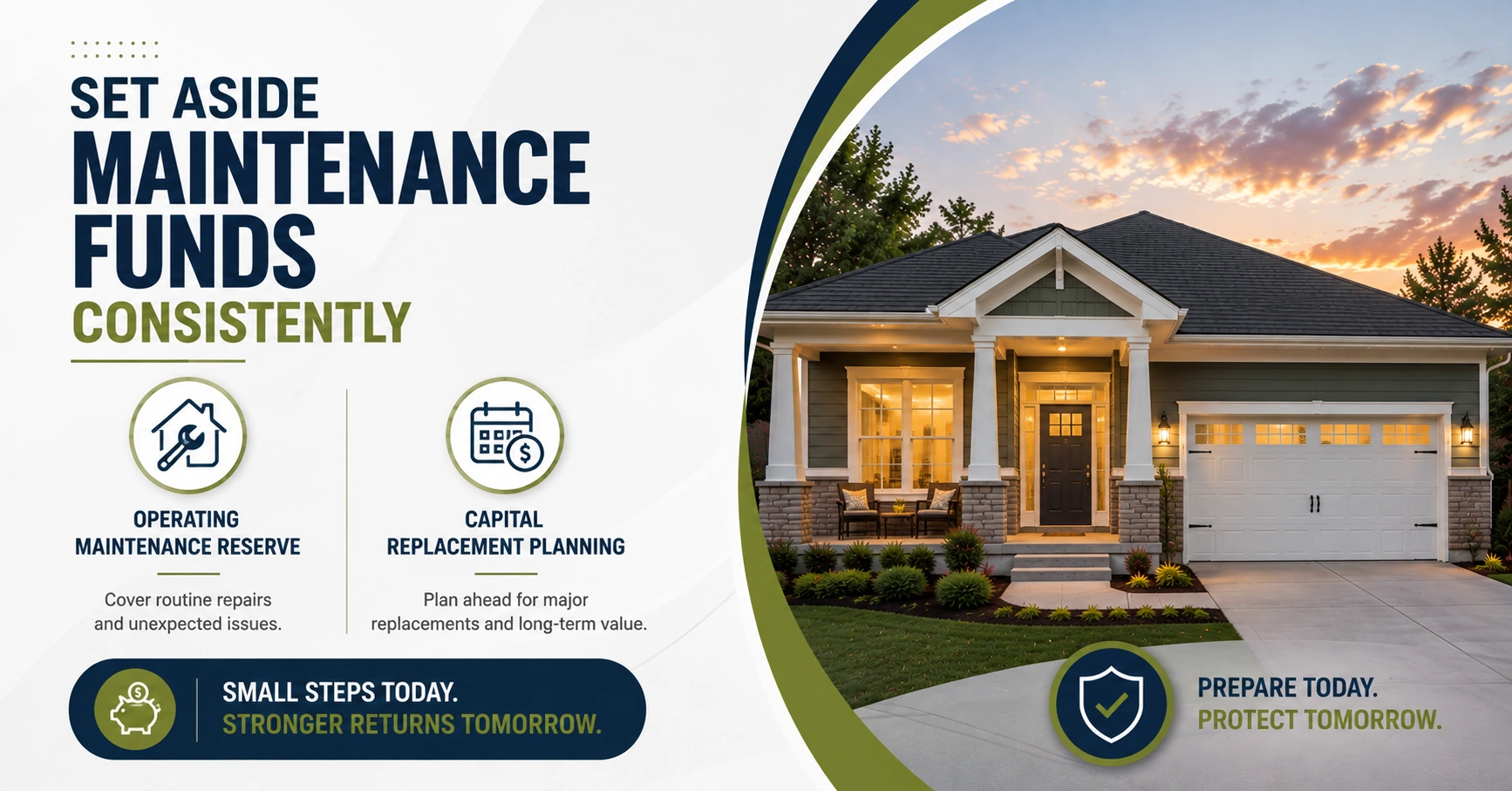
Set Aside Maintenance Funds Consistently
There is no single maintenance reserve amount that works for every rental property.
A property's age, condition, previous repair history, major systems, and expected turnover can all affect how much an owner should prepare.
The important principle is consistency.
Rather than finding money only when a repair occurs, owners can set aside a portion of rental income regularly and build a reserve over time.
Consider two separate planning needs:
Operating maintenance reserve:
For routine service, minor repairs, preventive maintenance, and smaller unexpected issues.
Capital replacement planning:
For larger future expenses such as HVAC replacement, roofing, water heaters, flooring, or major appliances.
Keeping these needs visible helps prevent long-term replacements from being mistaken for unusual emergencies when many of them are predictable ownership expenses.
Track Repairs to Find Your Real Maintenance Costs
A budget becomes more accurate when it is compared with actual spending.
Keep a record of each maintenance expense, including:
Date
Property
Problem reported
Work completed
Vendor
Cost
Type of expense
Recommended follow-up
Over time, patterns become easier to identify.
For example, repeated plumbing repairs may indicate a larger underlying issue. Multiple HVAC service calls may suggest that an aging system deserves closer evaluation. Higher-than-expected turnover expenses may reveal that certain finishes or materials are requiring frequent replacement.
Repair history turns maintenance budgeting from an estimate into a property-specific planning tool.
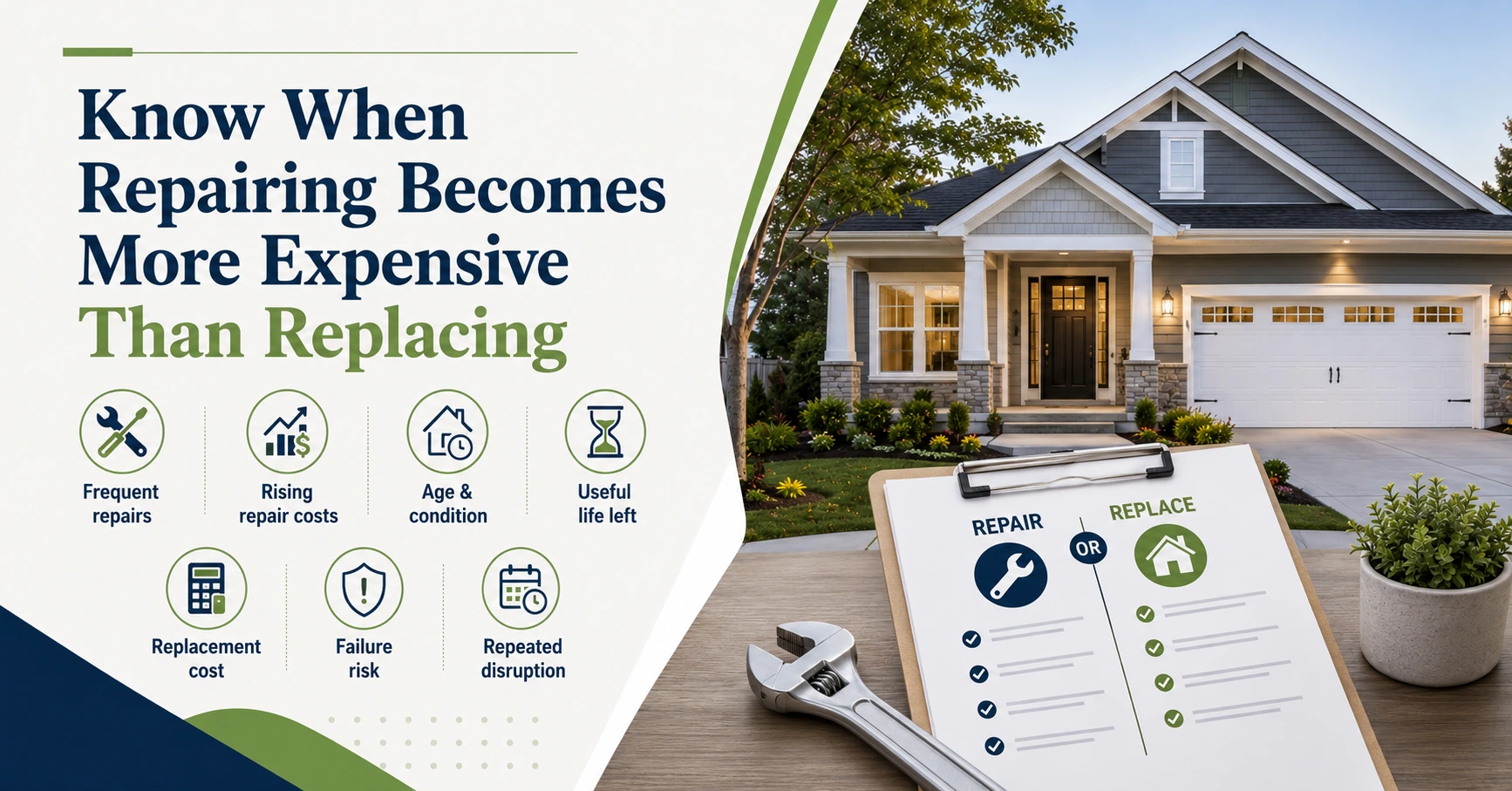
Know When Repairing Becomes More Expensive Than Replacing
A predictable maintenance budget should also help owners evaluate when another repair may no longer be the best financial decision.
An older system that requires repeated service can create significant cumulative costs.
When evaluating whether to repair or replace something, consider:
Frequency of previous repairs
Recent repair costs
Age and condition
Expected remaining useful life
Cost of replacement
Potential for additional property damage if the component fails
Disruption repeated failures may create
This applies especially to major systems and frequently used components such as HVAC equipment, water heaters, appliances, flooring, and certain plumbing fixtures.
The cheapest immediate repair is not always the most cost-effective long-term decision.
Resident Communication Can Help Control Maintenance Costs
Residents also play an important role in maintenance planning.
When a resident reports a leak, HVAC problem, slow drain, moisture issue, or other concern early, owners have an opportunity to investigate before the problem becomes more serious.
Make maintenance reporting simple and explain which problems should be reported promptly.
Residents should understand:
How to submit maintenance requests
Which situations require urgent attention
Basic responsibilities established in the lease
How to report leaks or moisture
How to communicate HVAC or appliance problems
Clear communication does not prevent every repair, but reducing reporting delays can make maintenance easier to manage.
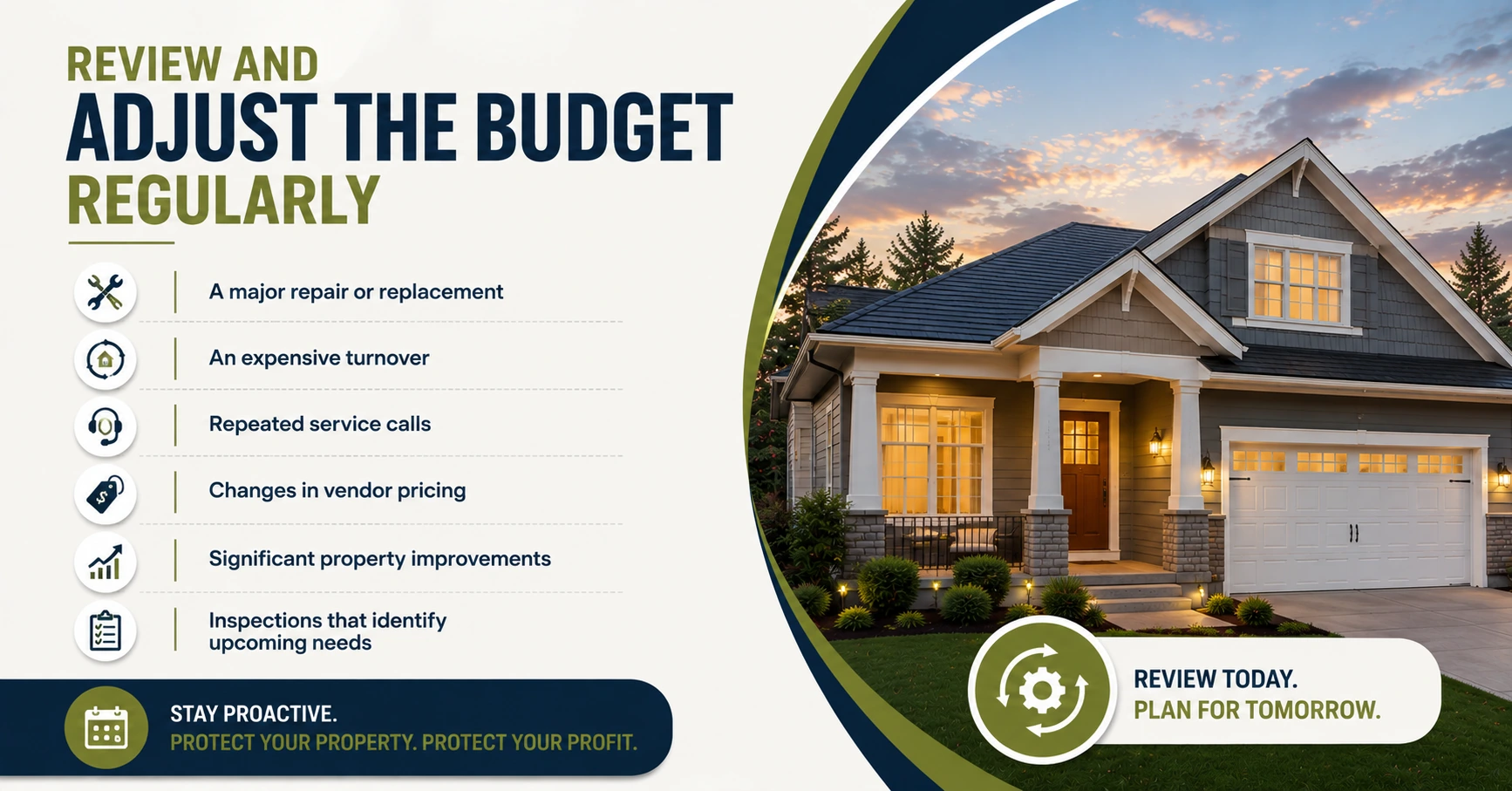
Review and Adjust the Budget Regularly
A maintenance budget should change as the property changes.
Review it at least annually and whenever a major event affects the property's maintenance profile.
Consider an adjustment after:
A major repair or replacement
An expensive turnover
Repeated service calls
Changes in vendor pricing
Significant property improvements
Inspections that identify upcoming needs
Replacing an aging HVAC system, for example, may reduce immediate HVAC repair risk, but that does not mean the overall maintenance reserve should disappear. Funds can instead prepare for the property's next major need.
How Revolution Rental Management Helps Griffin Owners Manage Maintenance
Building a maintenance budget becomes easier when owners also have systems for documenting, coordinating, and responding to property needs.
Revolution Rental Management provides property management services in Griffin and includes maintenance and property inspections among its management services.
Residents can submit maintenance issues through an online portal, while Revolution coordinates communication among residents, owners, and vendors during the maintenance process.
This organized approach can give rental owners greater visibility into what is happening at their property while reducing the day-to-day work involved in coordinating individual repair requests.
Professional property management can also connect maintenance with the broader needs of the investment, including leasing, rent collection, inspections, resident communication, and ongoing property oversight.

Build a More Predictable Maintenance Strategy
Maintenance will never be completely predictable. HVAC systems can fail, plumbing problems can appear unexpectedly, and normal wear will eventually require repairs and replacements.
What landlords can control is how prepared they are when those expenses arrive.
For Griffin, GA rental owners, a stronger maintenance budget starts with understanding the property, tracking previous repairs, planning preventive maintenance, setting aside reserves, evaluating repair-versus-replace decisions, and reviewing the plan regularly.
With those systems in place, maintenance becomes less of a financial surprise and more of a manageable cost of protecting a rental investment.
If you own a rental property in Griffin and want professional support with maintenance coordination, inspections, resident management, leasing, and other day-to-day responsibilities, Revolution Rental Management can help you take a more organized approach to managing your investment.
Contact Revolution Rental Management to learn more about professional property management in Griffin, GA and request a free rental analysis.
Q&A
Question: What should a Griffin, GA rental maintenance budget include?
Answer: A maintenance budget should account for routine repairs, preventive and seasonal maintenance, turnover expenses, emergency repairs, and larger future replacements such as HVAC systems, water heaters, roofing, flooring, and appliances.
Question: How can landlords make rental maintenance costs more predictable?
Answer: Landlords can improve predictability by tracking repair history, inspecting major systems, scheduling preventive maintenance, setting aside reserves regularly, and updating the budget as the property's condition changes.
Question: Should landlords keep money reserved for emergency repairs?
Answer: Yes. Maintaining an emergency reserve can help owners respond to unexpected problems without relying entirely on current rental income or disrupting other property expenses.
Question: How does preventive maintenance help protect rental income?
Answer: Preventive maintenance can identify smaller property concerns before they develop into more significant problems. It also helps owners plan upcoming expenses instead of relying only on emergency repairs.
Question: When should a landlord replace something instead of repairing it again?
Answer: Owners should consider repair frequency, recent costs, age, condition, remaining useful life, replacement cost, and the potential consequences of another failure when deciding whether continued repairs still make financial sense.